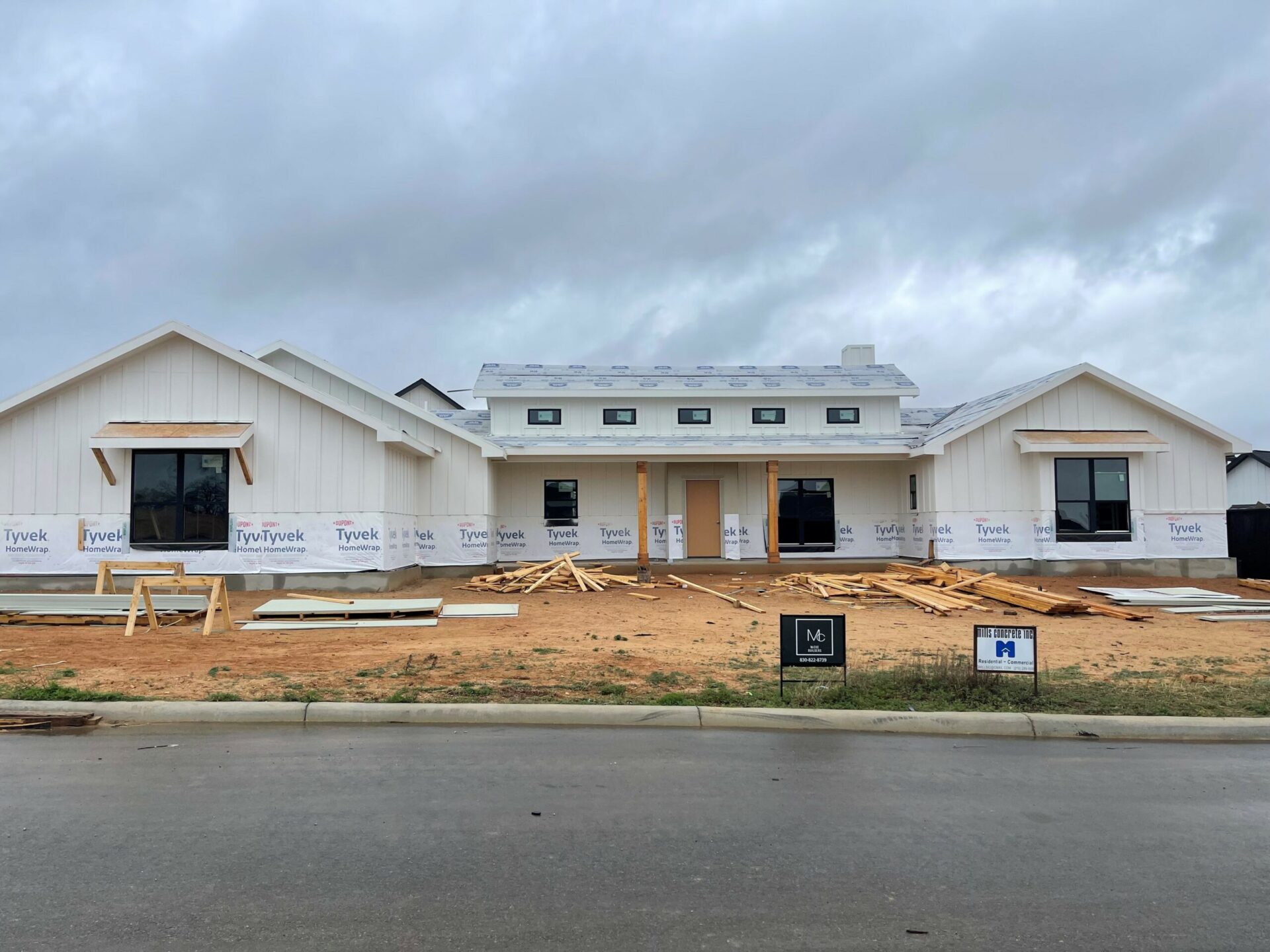

One of the questions we hear pretty often from homeowners around La Vernia is, “What size propane tank do I need?”
It sounds like there should be a simple answer, but propane tank sizing really depends on how your home is set up and how you plan to use propane. A family using propane for a cooktop and water heater has completely different needs than a homeowner running their heat, water heater, fireplace, pool heater, outdoor kitchen, and whole-home generator on propane.
Around here, we also see plenty of homeowners building on acreage, planning outdoor living spaces, adding shops, or thinking ahead to a generator. Those future plans matter just as much as what is connected to propane today. That is why we always look at the whole picture before recommending a residential propane tank size.
What Are the Most Common Propane Tank Sizes for Homes?
For residential properties, some of the most common propane tank sizes you will hear about are 120 gallons, 250 gallons, 500 gallons, and 1,000 gallons.
The important thing to remember is that bigger is not automatically better, and smaller is not automatically cheaper in the long run. The right propane tank should give your home enough fuel capacity for the appliances you use while also making sense for your property, delivery schedule, and future plans.
Another thing that surprises some homeowners is that propane tanks are not filled all the way to 100 percent. Propane needs room to expand as temperatures change, so tanks are typically filled to around 80 percent of their total capacity. That means a 500-gallon propane tank holds roughly 400 gallons of propane when considered full.
Is a 120-Gallon Propane Tank Enough?
A 120-gallon propane tank can work well when propane is being used for only a limited part of the home.
For example, a homeowner might use propane for a water heater, cooktop, fireplace, or clothes dryer while relying on electricity for most other systems.
If that is all you plan to use propane for, a smaller tank may make perfect sense.
Where we encourage homeowners to think ahead is when there is a good chance more propane appliances are coming later. Maybe you are building a home now and plan to add an outdoor kitchen in a few years. Maybe a pool is part of the long-term plan. Maybe you know you eventually want a whole-home generator.
Those conversations are worth having before the propane system goes into the ground.
SouthTex works directly with homeowners and builders on new construction projects, and part of that process is looking at house plans and planning the system so there is room to grow.
When Does a 250-Gallon Propane Tank Make Sense?
A 250-gallon propane tank gives homeowners a little more flexibility.
We may see this size used when several appliances are running on propane, but propane is not necessarily powering the majority of the home.
The biggest question is not simply how many appliances you have. It is how much propane those appliances use.
A cooktop does not place the same demand on a propane system as a pool heater or backup generator. That is why simply counting appliances can sometimes give homeowners the wrong idea about the tank size they actually need.
When we size a propane system, we want to understand what those appliances are, how often they will run, and whether anything else may be added down the road.
Why Is the 500-Gallon Propane Tank So Common?
A 500-gallon propane tank is one of the most common sizes for residential propane systems, and for good reason.
It can work well for homes where propane is doing more of the heavy lifting. That might include home heating, hot water, cooking, fireplaces, generators, or outdoor living features.
For many La Vernia homeowners, a 500-gallon tank provides a good balance between having plenty of propane available and not needing an excessively large tank for the property.
But we would never tell someone they need a 500-gallon tank just because they have a certain size house.
Two homes that are both 2,500 square feet could have completely different propane needs. One might only use propane for the water heater and cooktop. The other could have propane heat, two water heaters, a pool heater, fireplace, outdoor kitchen, and Generac generator.
Same size house. Very different propane system.
That is why proper propane tank sizing matters.
When Would a Home Need a 1,000-Gallon Propane Tank?
A 1,000-gallon propane tank is generally something we look at when a property has substantial propane demand.
That might be a larger home where several major systems use propane, or a property where the homeowner wants more fuel storage available between deliveries.
Whole-home generators can also become a big part of that conversation.
Texas weather has a way of keeping us humble. Around La Vernia, we know a strong thunderstorm or winter weather event can turn into a power outage pretty quickly. If a propane-powered generator is expected to run the house during an extended outage, we need to make sure the propane system is designed with that demand in mind.
SouthTex installs Generac generators and can handle the complete setup, including the generator, electrical work, propane tank, and propane connection.
If the generator is sharing a propane tank with your home’s other appliances, all of those loads need to be considered together.
Your Future Plans Matter More Than You Think
This is probably one of the biggest pieces of advice we can give homeowners building around La Vernia and Wilson County: tell us what you might want five years from now, not just what you are installing today.
We work on a lot of new construction projects where the homeowner already knows a pool is coming later. Or maybe they want an outdoor kitchen once the house is finished. Sometimes they are not ready to purchase a generator yet, but they know it is on the wish list.
Knowing those things ahead of time helps us plan the propane system accordingly.
It is usually much easier to think through future propane needs while the house and system are being built than it is to discover later that the original setup was designed only for today’s appliances.
We routinely work with both homeowners and home builders and look at plans with those future propane needs in mind.
How Often Do You Want to Fill Your Propane Tank?
Tank size can also affect how often you need propane deliveries.
Naturally, a smaller tank being used heavily will need to be filled more frequently than a larger tank serving the same appliances.
We always encourage customers not to wait until the gauge is sitting on empty before calling. During busy seasons, propane deliveries typically need a few days of notice, so planning ahead makes things much easier. SouthTex generally recommends allowing about three to five days between placing an order and delivery.
For homeowners who would rather not keep checking the tank gauge, remote tank monitoring can make things even simpler.
Our Stay Full Remote Tank Monitoring system allows both the homeowner and SouthTex to see the tank level, helping automate the refill process before running low becomes something you have to think about.
Should You Choose an Above-Ground or Underground Propane Tank?
Once you know what size propane tank you need, the next question is usually where to put it.
Above-ground propane tanks are common throughout the La Vernia area, especially on properties with plenty of space. They are accessible for filling, inspection, and service and are often the most straightforward installation.
Underground propane tanks are another option for homeowners who would rather keep the tank mostly out of sight. You will still see the access dome above ground, but the majority of the tank sits below the surface.
Which setup makes the most sense depends on your property layout, the size of the tank, access for delivery trucks, required safety clearances, and your personal preference.
This is another reason we like looking at the actual property rather than giving someone an answer based only on a phone conversation.
So, What Size Propane Tank Do You Actually Need?
If there is one thing we want homeowners to take away from this, it is that there is no magic formula based only on the square footage of your house.
Your propane tank size should be based on how you live.
What appliances are you running? Are you heating the entire home with propane? Do you have a generator? Is a pool coming later? Are you building an outdoor kitchen? How often do you want propane delivered?
Those are the questions that help us recommend the right setup.
We have homeowners come to us with everything from a simple propane appliance setup to new homes where propane will be used throughout the property. Our job is to make sure the system makes sense for what you need today and what you may want tomorrow.
If you are building, adding propane to an existing home, or just aren’t sure whether your current propane tank is the right size, give us a call. We are right here in La Vernia, and we are always happy to talk through the options.
Call SouthTex Propane at 210-997-8241 to discuss propane tank installation in La Vernia and throughout our South and Central Texas service area. SouthTex continues to serve and expand throughout Wilson, Guadalupe, Comal, Karnes, Bexar, and surrounding areas.
Frequently Asked Questions About Propane Tank Sizes
What size propane tank is best for a house?
There is no single propane tank size that is best for every home. The right size depends on the number and type of propane appliances, the amount of propane your household uses, whether you have a generator or other high-demand equipment, and whether you plan to add propane appliances later.
Is a 500-gallon propane tank enough for a house?
A 500-gallon propane tank is a common option for residential properties and can work well for homes using propane for several appliances. Whether it is large enough for your home depends on the total propane demand of your heating system, water heater, generator, fireplace, pool heater, outdoor kitchen, and any other propane equipment.
How much propane is actually in a 500-gallon tank?
A propane tank is generally filled to about 80 percent of its total capacity to leave room for expansion. That means a 500-gallon propane tank will typically contain around 400 gallons of propane when full.
Can my whole-home generator use the same propane tank as my house?
In many cases, yes. However, the propane tank, regulators, piping, and overall system need to be sized for the combined demand of the generator and the other propane appliances in the home. If you are planning a whole-home generator, it is important to include it when determining propane tank size.
Should I get a larger propane tank if I plan to add a pool?
It may make sense. Pool heaters can add significant propane demand, so if a pool is part of your future plans, let your propane installer know before the system is designed. The same goes for future generators, outdoor kitchens, fireplaces, or other propane appliances.
Can I install a propane tank underground at my La Vernia home?
Underground propane tanks are an option for many properties. Whether one is appropriate for your home depends on the tank size, property layout, installation requirements, access, and other site conditions. A propane professional can help determine whether an above-ground or underground installation is the better fit.
How often will my propane tank need to be filled?
That depends on the size of the tank and how much propane your household uses. A home using propane only for cooking will go through fuel much more slowly than a home using propane for heating, hot water, a pool, and a generator. Remote tank monitoring can also help homeowners keep track of propane levels and avoid having to remember when it is time to schedule a delivery.
Does SouthTex Propane install residential propane tanks in La Vernia?
Yes. SouthTex Propane provides propane tank installation, propane delivery, new construction propane planning, and related services for homeowners in La Vernia and throughout South and Central Texas. The company also works directly with homeowners and home builders to design propane systems around current and future needs.